
Ancient wisdom.Modern questions.
Who are we, beneath everything we have built? Why does even abundance leave us restless? For three thousand years India has argued about these questions — rigorously, beautifully, and without agreeing. Step into the argument.
ईशा वास्यमिदं सर्वं यत्किञ्च जगत्यां जगत् ।
तेन त्यक्तेन भुञ्जीथा मा गृधः कस्यस्विद्धनम् ॥
īśā vāsyam idaṃ sarvaṃ yat kiñca jagatyāṃ jagat · tena tyaktena bhuñjīthā mā gṛdhaḥ kasyasvid dhanam
Enjoy it by letting it go. Do not grasp — for whose, finally, is wealth?
Isha Upanishad · Verse 1 · Editorial renderingTwelve ways of seeing.One question at a time.
A darśana is, literally, a way of seeing. Choose a question and watch twelve schools answer it — briefly, fairly, in their own terms. Then follow the one that unsettles you most.
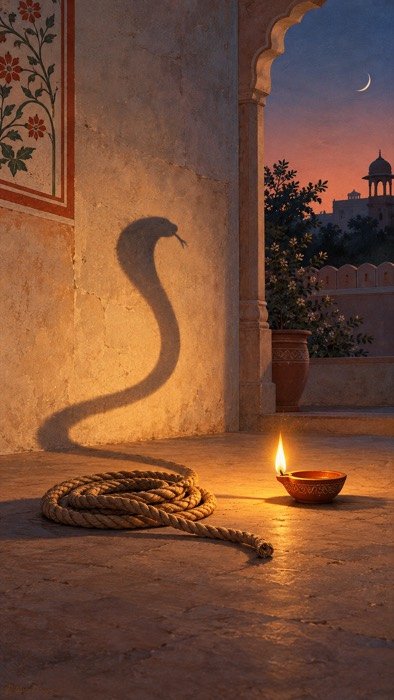
Advaita Vedanta
Ultimately, ātman and Brahman are not two.
Read the school →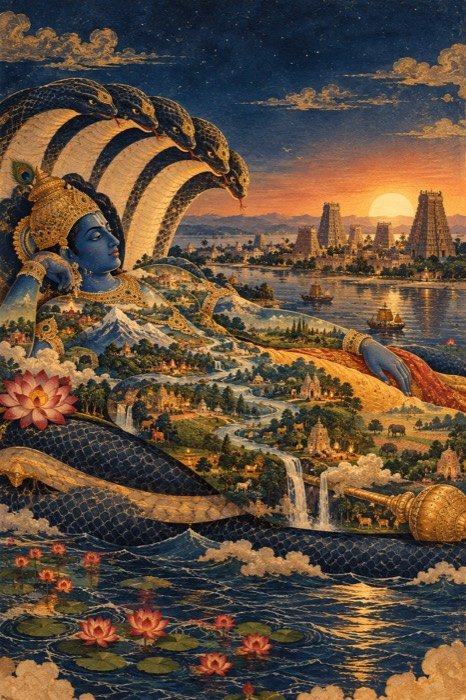
Vishishtadvaita
God, souls and the world form one reality without losing their real distinctions.
Read the school →
Dvaita Vedanta
God, individual souls and matter are eternally distinct, with everything dependent on God.
Read the school →
Samkhya
Consciousness and nature are fundamentally different, and freedom comes from discerning them.
Read the school →
Yoga
Yoga disciplines the mind so the seer is no longer confused with its activity.
Read the school →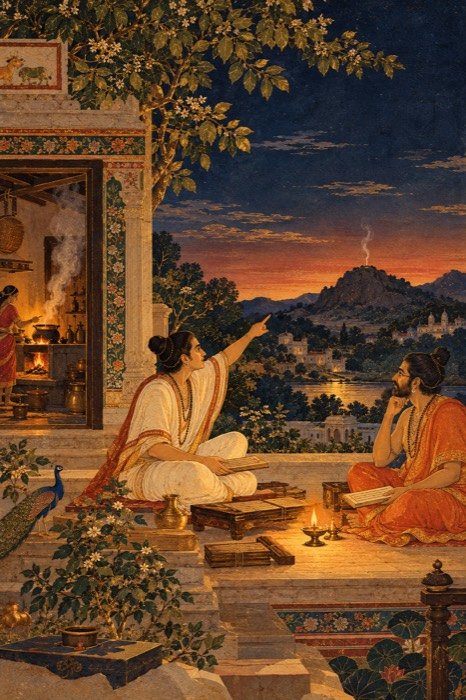
Nyaya
Reliable knowledge and disciplined reasoning can correct error and contribute to liberation.
Read the school →
Vaisheshika
Reality can be understood through distinct categories of substances, qualities and relations.
Read the school →
Mimamsa
Careful interpretation of the Veda discloses duties that perception alone cannot establish.
Read the school →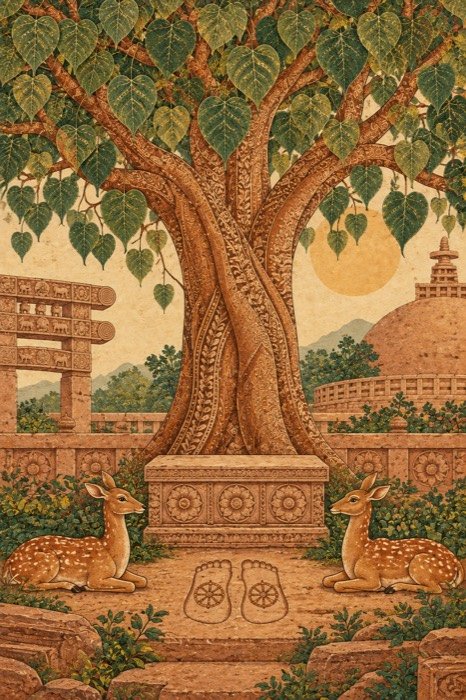
Buddhism
Buddhist traditions examine conditioned experience to end suffering without positing a permanent self.
Read the school →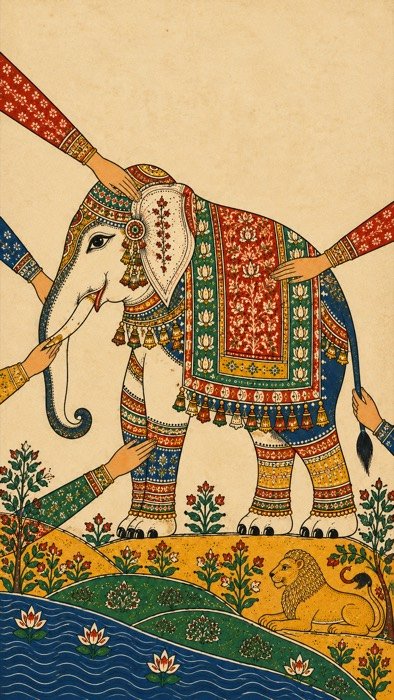
Jainism
Many real souls seek freedom through knowledge, disciplined conduct and radical non-harm.
Read the school →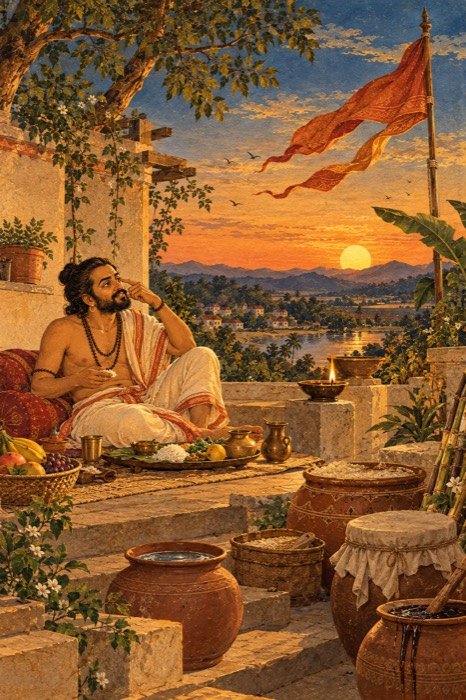
Charvaka
The received Charvaka view grounds consciousness in the living body and challenges claims about unseen worlds.
Read the school →
Kashmir Shaivism
Reality is a dynamic conscious whole whose freedom appears as the world and finite subjects.
Read the school →
Māyā is not the claimthat nothing exists.
A rope, a snake, and the difference between appearance and absolute reality. Why a metaphor is not a proof — and the objection Advaita must still answer.
Read the essayArtha,rightly held.
Indian thought never asked the prosperous to be ashamed. It named wealth as one of four legitimate aims of a human life — and then asked, with great precision, what it is for.
Dharma
Order · DutyThe right shape of things. The frame inside which every other pursuit is meant to sit.
Artha
Wealth · Power · MeansNot a vice to renounce but an aim to master — the subject of an entire classical science of statecraft.
Kāma
Desire · Beauty · DelightPleasure treated as a serious subject, worthy of refinement rather than suspicion.
Mokṣa
LiberationThe freedom no possession can secure — and none can take away. Each school defines it differently.
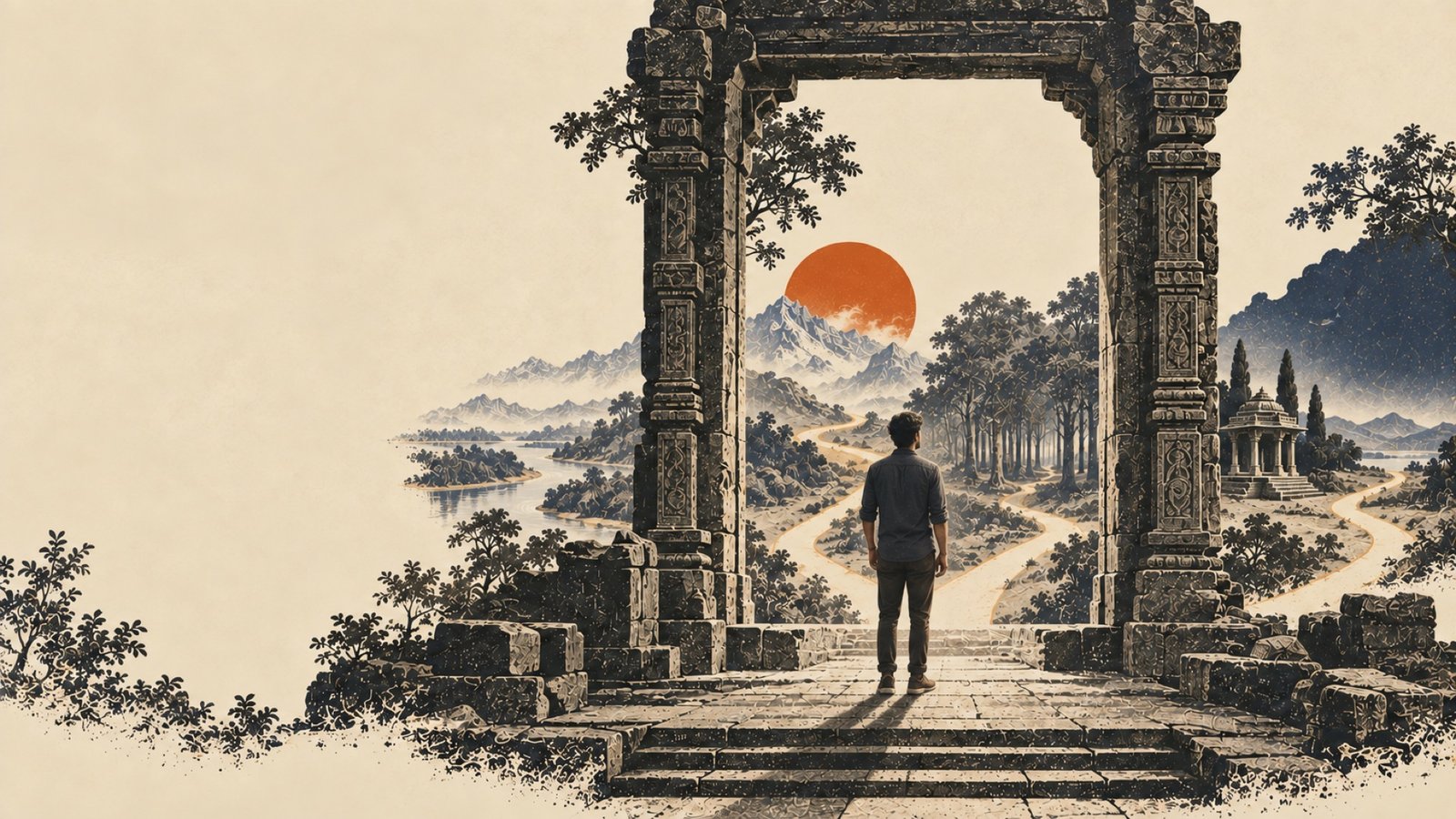
No background needed.Only a question.
- 01
I am completely new
A gentle orientation, then two genuinely different answers.
- 02
I want to understand the Self
Witness, soul, process or living body?
- 03
I am questioning God
Theism, non-theism and materialist dissent.
- 04
I want to understand suffering
Different diagnoses lead to different paths.
- 05
I am interested in consciousness
Is awareness fundamental, plural or embodied?
- 06
I want practical wisdom
Attention, non-harm and the quality of our reasons.
- 07
I want to compare philosophies
Learn to recognise the disagreement before choosing a side.
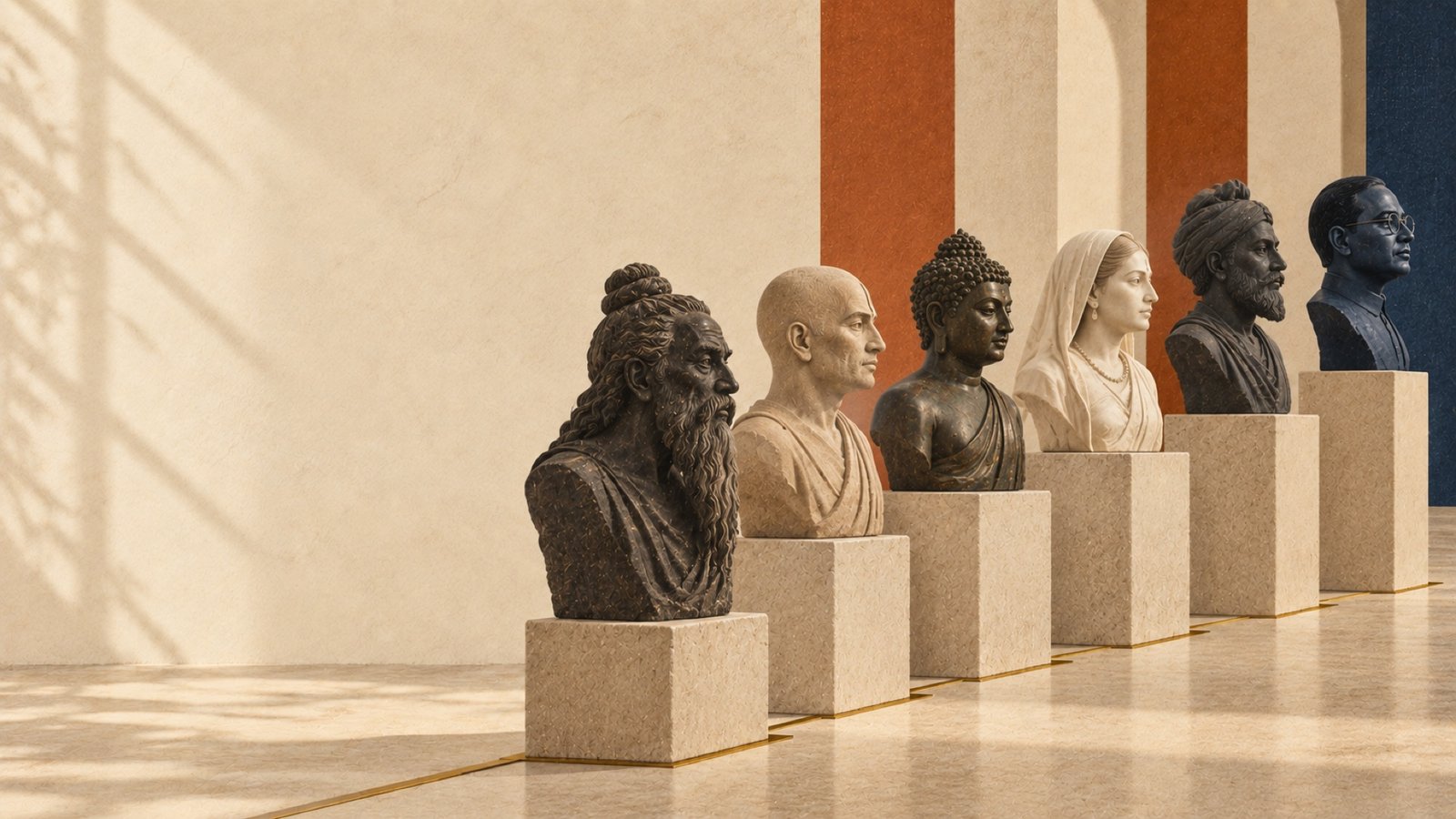
Forty-one minds,in their own words.
From Kapila and the Buddha to Śaṅkara, Nāgārjuna and Abhinavagupta — each biography separates what is known from what is remembered, and leaves you with a question to carry.
MeetAnvesha.
अन्वेषा — “the one who searches.” A quiet interlocutor that answers from our library, shows its sources, and returns you to a better question.
- 01Plain language first; Sanskrit explained in context.
- 02Every answer cites the passages it draws on.
- 03A practical reflection to take into your day.
Several traditions would say the restlessness is not a malfunction but information. Buddhism traces it to taṇhā — craving that attaches to whatever it has just acquired, so satisfaction keeps moving ahead of you.1
Advaita reframes the question: what if you are seeking completeness in objects, when the tradition argues it belongs to the awareness that witnesses them?2
A reflection for today: notice the moment after something you wanted arrives. What, precisely, changes — and how long does it last?
Illustrative example · Answers are drawn from the library, not personal advice


One idea, once a month,written by hand.
A single concept, a single text, a single question — composed slowly and sent without noise. Unsubscribe whenever silence serves you better.