
Forty-one minds.Twelve schools.
Commentators, logicians, poets and dissenters. Each biography distinguishes the historical record from the tradition’s memory, and ends with a question worth keeping.
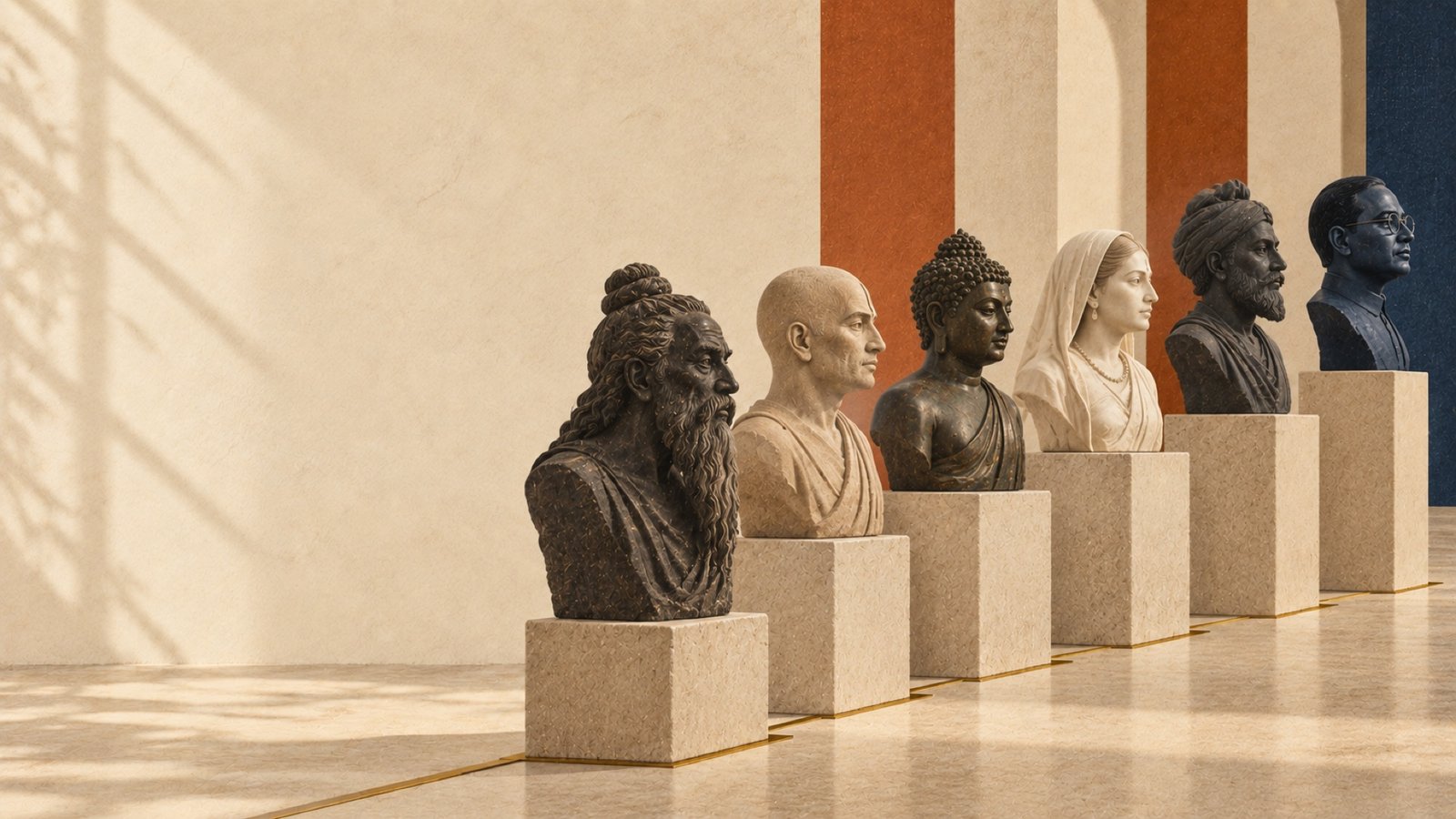
Gaudapada
c. 6th–7th century CE; debatedAn early voice of radical non-duality
Advaita VedantaAdi Shankara
c. 8th century CEThe commentator who reshaped Advaita
Advaita VedantaSureshvara
c. 8th–9th century CEWhat can action contribute to liberation?
Advaita VedantaYamunacharya
c. 10th–11th century CEBefore Ramanuja: self, devotion and philosophical defence
VishishtadvaitaRamanuja
11th–12th centuries CEUnity that preserves the reality of persons
VishishtadvaitaVedanta Desika
13th–14th centuries CEPhilosophy, poetry and the discipline of surrender
VishishtadvaitaMadhva
13th century CEA defence of enduring difference
Dvaita VedantaJayatirtha
14th century CEMaking Dvaita’s arguments explicit
Dvaita VedantaVyasatirtha
15th–16th centuries CEDebate in the world of Vijayanagara
Dvaita VedantaKapila
Traditional foundational sage; dates uncertainA foundational sage, with an uncertain historical life
SamkhyaIshvarakrishna
c. 4th–5th century CEGiving Samkhya its enduring concise form
SamkhyaVachaspati Mishra
c. 9th–10th century CEAn interpreter across philosophical boundaries
Samkhya · YogaPatanjali
Pātañjala Yoga synthesis c. 4th–5th century CESystematising a discipline of mind
YogaVyasa
Yoga commentator; date and textual relation debatedThe commentator inside the Yoga tradition
YogaAkshapada Gautama
Early centuries BCE/CE; uncertainThe attributed author of the Nyaya Sūtra
NyayaVatsyayana
c. 4th–5th century CEExplaining why philosophical inquiry matters
NyayaUdayana
c. 10th–11th century CEDefending the self and arguing for God
NyayaGangesha
c. 13th–14th century CE; debatedA new precision in the theory of knowledge
NyayaKanada
Traditional founder; exact dates unknownCategories, particulars and the structure of the world
VaisheshikaPrashastapada
c. 5th–6th century CEReorganising the categories of reality
VaisheshikaShridhara
c. 10th century CEDefending a world of distinct things
VaisheshikaJaimini
Last centuries BCE/early CE; debatedMaking interpretation a philosophical discipline
MimamsaShabara
Early to mid-first millennium CE; uncertainThe interpreter between sūtra and system
MimamsaKumarila Bhatta
c. 7th century CEAuthority, error and the claims of language
MimamsaPrabhakara
c. 7th century CEMeaning, obligation and the disclosure of experience
MimamsaGautama Buddha
c. 5th century BCE; precise dates debatedA life remembered through a path out of suffering
BuddhismNagarjuna
c. 2nd–3rd century CEEmptiness as a challenge to independent existence
BuddhismAsanga
c. 4th century CEThe bodhisattva path as a systematic philosophy
BuddhismVasubandhu
c. 4th–5th century CEFrom the analysis of phenomena to the analysis of cognition
BuddhismDignaga
c. 5th–6th century CETransforming the standards of philosophical proof
BuddhismMahavira
c. 6th–5th century BCELiberation through non-harm and restraint
JainismUmasvati
c. 2nd–5th century CE; debatedBringing Jain thought into a systematic Sanskrit text
JainismKundakunda
Early centuries CE; dating debatedThe soul viewed from different standpoints
JainismSiddhasena Divakara
c. 5th century CE; debatedA disciplined account of partial perspectives
JainismBrihaspati (traditional attribution)
Traditional attribution; no secure biographyAn authority remembered through a missing textual inheritance
CharvakaPurandara
Known through fragmentary reportsA fragmentary voice on everyday inference
CharvakaJayarashi Bhatta
c. 8th–9th century CETesting the foundations of philosophical certainty
CharvakaVasugupta
c. 9th century CEThe name at the beginning of the Shiva Sūtra tradition
Kashmir ShaivismUtpaladeva
c. 10th century CERecognition as a route to understanding consciousness
Kashmir ShaivismAbhinavagupta
c. 10th–11th century CEConsciousness, ritual and the experience of art
Kashmir ShaivismKshemaraja
c. 11th century CEMaking recognition accessible to a new reader
Kashmir Shaivism